
Review · KRAKOW
Krakow: UNESCO Bochnia Salt Mine Tour & Boat Expedition
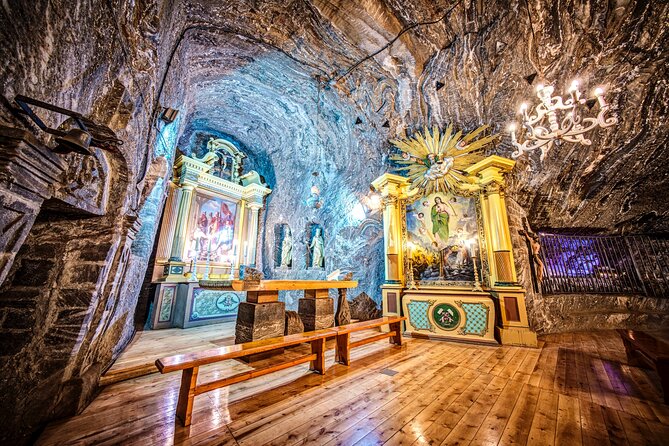
Bochnia Salt Mine offers something Wieliczka cannot quite match: a working mine atmosphere with a short underground boat ride and an authentic miner’s train. You’ll walk through salt-cut chambers, chapels, and tunnels while projections explain the mine’s long past. I like the unusual mix of history and hands-on adventure, and I like that this lesser-known site usually feels calmer than Kraków’s better-known salt mine. The main catch is the long walk underground, with some steps and attractions that are not suitable for visitors with mobility limits.
The tour also handles the awkward parts well. Your driver contacts you on WhatsApp the evening before, collects you in Kraków, and waits while you tour the mine. Drivers such as Olaf, Mirek, Marek, Kamil, and Margaret have been praised for clear communication, local tips, and friendly care. Just remember that the underground guide may lead in Polish, with an audio guide available in six languages.
Key points to know before you book
- Bochnia is Poland’s oldest operating salt mine, with mining dating to the 13th century.
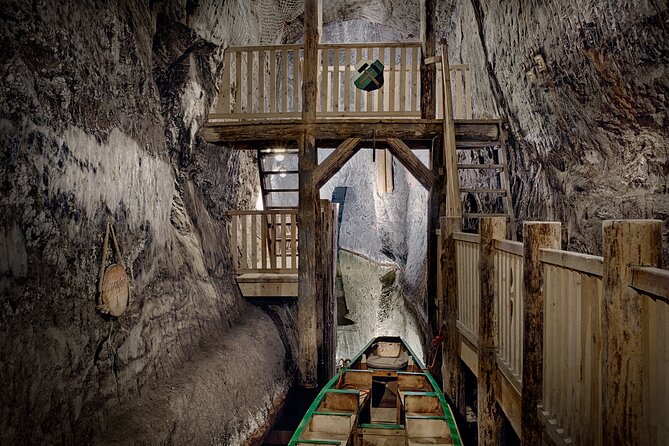
- The boat crossing is short but rare, taking you through a dark, brine-filled underground passage.
- A miner’s train carries you through part of the complex, adding a real working-mine feel.
- The mine stays at 14 to 16°C all year, so a sweater or light jacket is useful even in summer.
- The tour involves plenty of walking, and the train and boat are not available to people using a cane or with mobility impairments.
- Hotel pickup, entrance, transport, and audio guide are included in the $33 price, while food and drinks cost extra.
Why Bochnia feels different from Wieliczka

Many people booking a salt mine from Kraków picture Wieliczka, with its famous grand chapels and salt sculptures. Bochnia gives you a different experience. It is Poland’s oldest salt mine, operating since the 13th century, and it feels more like a real underground industrial site than a polished museum.
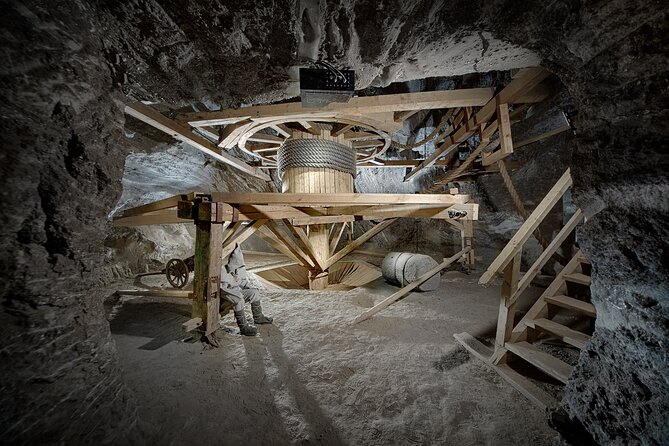
That distinction matters. You will see chapels and salt-carved features, but the main appeal is the mine itself: long corridors, large chambers, brine tunnels, transport routes, and working spaces. The result is more educational and practical than ornamental.
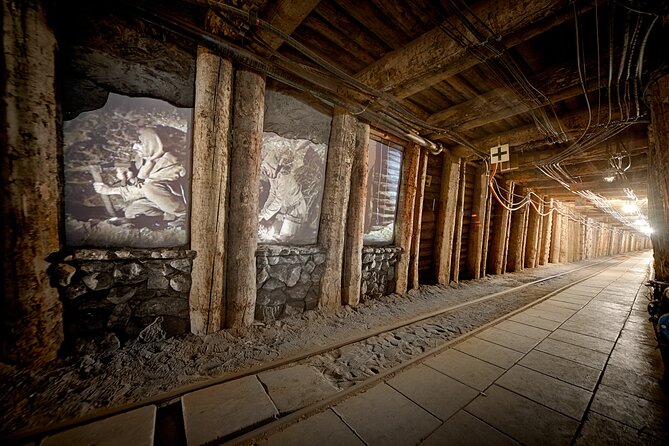
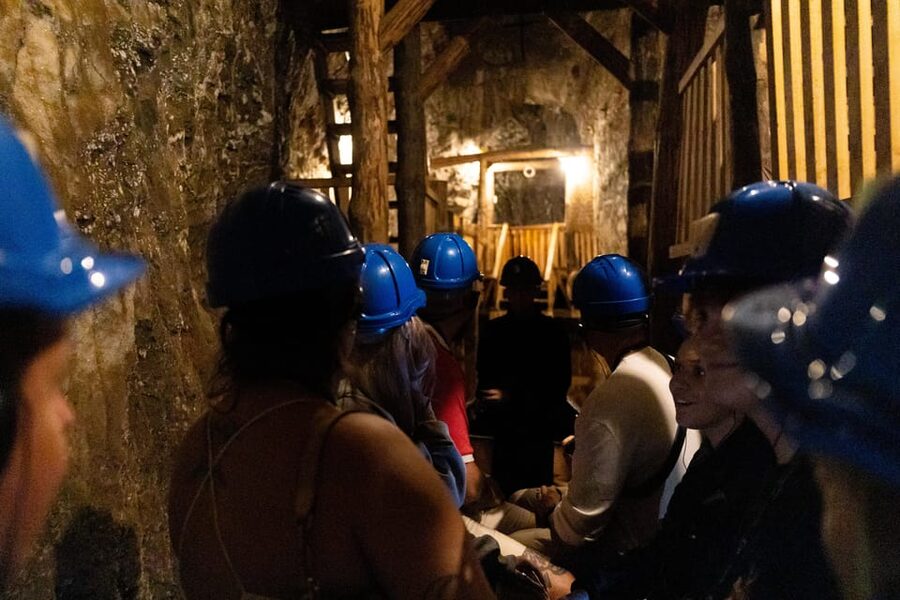
The tour also uses multimedia projections and interactive displays. These help explain how miners worked below ground and bring local stories and legends to life. If you enjoy history best when it is shown rather than simply read from a sign, this modern presentation works well.
I would choose Bochnia if you want a salt mine with a little adventure built in. I would choose Wieliczka instead if your main goal is a grand display of carved statues, famous chapels, and decorative salt art. One visitor booked Bochnia expecting the other mine and found it more like a school trip, which is a useful warning. Check the difference before you pay.
A few more days afloat around Poland worth a look
- Kraków: Evening or Night River Cruise
★ 4.0 · 7,386 reviews - Gdansk: City Cruise on Historical Polish Boat
★ 4.8 · 2,913 reviews - Krakow: Sightseeing Cruise by Vistula River
★ 4.1 · 1,897 reviews
The 75-minute ride from Kraków
Pickup usually takes place between 9:30 and 10:00 in the morning, though your exact time and meeting point are confirmed the night before. Kraków’s pedestrian streets and limited parking mean the van may not stop directly outside your hotel. The operator contacts you through WhatsApp and arranges a nearby, practical pickup point.
The drive to Bochnia takes about 75 minutes. That is long enough for the driver to explain the plan, point out useful facts about Poland, or offer Kraków suggestions. Drivers including Olaf, Mirek, Peter, Niko, and Margaret have been singled out for being punctual, friendly, and helpful on the road.
Transport is one of the strongest parts of this day trip. You do not need to arrange a train, find the mine entrance, or work out a return connection after several hours underground. At the end of the visit, your driver meets you and brings you back to Kraków.
The exact vehicle and group size can vary. Some departures feel small, especially when the first group enters the mine early in the day. That can make the multimedia stops easier to see and the whole visit less crowded. Do not assume every departure will feel private, but an early start gives you the best chance of a quieter visit.
Descending into a real salt mine

You descend more than 200 metres below ground by elevator before beginning the main route. That first drop sets the tone. This is not simply a decorated cave. It is a large mine complex with a network of tunnels and chambers, and you will cover a fair distance inside it.
The temperature remains between 14 and 16°C throughout the year. In July or August, the cool air will feel pleasant at first, but you may want a jumper by the end of the tour. Wear shoes with good grip and comfortable clothing. The route lasts about three and a half hours, and the amount of walking is easy to underestimate.
The corridors show the mine’s working character. You move through spaces cut from salt, pass old mining areas, and reach chapels made from the same material. The chapels are atmospheric, but Bochnia is not presented as a single grand hall. The interest comes from the changing scale of the route, from narrower passageways to larger chambers.
Some accounts describe a long slide between levels, though this feature may not operate on every visit. One recent departure found the slide out of order. Treat it as a possible extra, not a central part of the booking.
Multimedia displays that make the history easier to follow

A long underground tour can become a blur of walls, salt, and dates. Bochnia avoids that problem with animated presentations, screens, projections, and interactive displays. These explain the mine’s development and show how the underground work was carried out.
I like this approach because it gives you a clear frame for what you are seeing. Instead of looking at a chamber and wondering what happened there, you get visual help showing its purpose and place in the mining story.
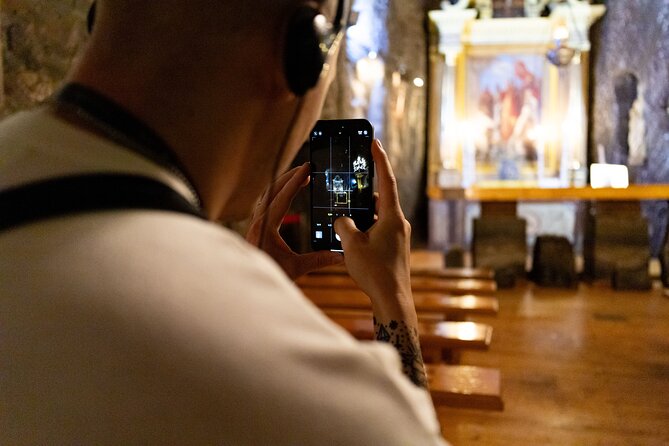
The tour normally uses an audio guide, with English, Spanish, French, German, Italian, and Polish listed as available languages. The live mine guide is Polish-speaking, so the headset matters if you do not understand Polish. Drivers sometimes add explanations in English, but you should not rely on the driver to translate the entire tour.
The audio system also lets you move through the route without needing to stand beside a guide for every sentence. That is helpful in the larger chambers, though the experience can feel less personal than a fully English-led tour. If you have questions, ask your driver or mine guide when possible. Several drivers have gone out of their way to explain points to English-speaking visitors.
Same water, a different boat:
- Krakow: Day or Night Vistula River Cruise with Audio Guide
★ 4.5 · 1,303 reviews - Krakow: Evening Cruise with a Glass of Wine
★ 4.0 · 1,054 reviews - Gdańsk: Sunset Cruise on a Historic Polish Boat
★ 4.9 · 977 reviews - Krakow: 1-Hour Evening Vistula River Cruise
★ 4.1 · 952 reviews
The miner’s train and the boat crossing

The train ride is one of the tour’s best details. It is short, but it uses the sort of underground transport associated with mining rather than a standard sightseeing tram. You get a practical sense of how people and equipment moved through the complex.
Do not expect the train to replace the walking. It covers one section of the route, while the rest still requires you to walk through tunnels and chambers. Think of it as a useful and memorable part of the visit, not a way to avoid the physical effort.
The boat crossing is even more unusual. You board for a short journey through a brine-filled passage in the mine. The setting is dark and enclosed, and the water gives you a different view of the underground workings. It is not a long cruise, but the novelty is the point.
You should be comfortable with confined spaces before booking. The boat route is narrow, and the mine itself includes enclosed corridors. People with claustrophobia may find the experience uncomfortable. For safety reasons, the boat and train are not available to people with mobility impairments or those using a cane.
Chapels, salt walls, and the scale of the route
Bochnia’s chapels are carved into the mine, and they show how miners brought religious life into their workplace. The salt surfaces, low light, and cool air give these spaces a quiet mood that you will not get in a church above ground.
The route’s scale is another surprise. A visit may cover several kilometres of underground passages, and some departures take close to four hours inside. That is why comfortable shoes matter more than stylish ones. You might also appreciate the mine’s occasional seating and food stop, especially during a long route.
A restaurant and food points operate inside the complex. Polish food is available, but prices can be higher than those in Kraków. One reported small plate of meat and vegetables cost 55 złoty, so check the price before filling your plate. You can bring water and a small snack, which is sensible for a day involving several hours of walking.
The mine’s cool, clean air is often described as pleasant for the respiratory system. Treat any health benefit as a feature of the underground climate, not as medical treatment. The practical benefit is simpler: the steady temperature makes the visit comfortable when Kraków is hot, though you still need a layer.
Is the $33 price good value?
At $33 per person, this is a strong-value day trip if you want transport and admission bundled together. The price includes hotel pickup and drop-off from Kraków, the entrance ticket, the driver, the audio guide, multimedia presentations, the train, and the boat crossing.
Buying these pieces separately would require more planning and would remove much of the convenience. You also skip the ticket counter, using an express security check rather than waiting to buy entry on arrival.
The value is especially good for first-time visitors who do not want to navigate local transport or return to Kraków after a long underground visit. You get roughly seven hours from pickup to return, including two 75-minute van rides and about four hours at the mine.
Food and drinks are not included. If you eat at the underground restaurant, budget with care. You can also bring water and a small snack, which keeps the total cost closer to the advertised price.
Who should book this experience?
I would recommend Bochnia to adults, older children aged four and above, and anyone who likes unusual transport, industrial history, and hands-on sightseeing. Families may enjoy the train and boat more than a standard museum visit, while the multimedia displays help keep the historical sections moving.
It also suits people who have already seen Kraków’s main sights and want a half-day outside the city. The tour feels different from a palace, church, or open-air attraction. You spend most of the day below ground, which is part of its appeal.
I would hesitate if you dislike enclosed spaces, have difficulty walking for several hours, or cannot manage steps. The mine is not suitable for wheelchair users, and the boat and train have stricter mobility rules. Children under four cannot join.
You should also book with the right expectation. This is not mainly a sculpture gallery. It is a working salt mine presented with modern displays, historic chambers, a train, and a boat ride.
Small details that make the day easier
Bring comfortable walking shoes, a warm layer, and water. Your mobile phone is useful for receiving the evening WhatsApp message with the exact pickup time and location.
Allow flexibility around the advertised seven-hour duration. The drive takes about 75 minutes each way, and the underground visit can involve a great deal of walking. If you have a tight evening reservation in Kraków, leave a cushion.
The mine is closed to pets, baby strollers, alcohol, and drugs. Children under four are not accepted. The tour is not wheelchair accessible, and a cane may prevent you from using the train or boat.
Free cancellation is available up to 24 hours before departure, and you can reserve now and pay later. That is useful if your Kraków schedule is still changing, but the practical decision comes down to the route itself: you must be comfortable underground and ready to walk.
Should you book Bochnia Salt Mine?
Book it if you want an unusual, well-organized trip from Kraków with real mining atmosphere, a short boat crossing, and a train ride below ground. At $33, the included transport and admission make it good value, and the drivers are often a major help with timing, local information, and communication.
Skip it if you want grand salt sculptures above all else, or if long walks and narrow tunnels sound tiring. For the right visitor, Bochnia is more than a substitute for Wieliczka. It is a different kind of salt mine, with a practical, adventurous feel that makes the day memorable.
FAQ
How long does the Bochnia Salt Mine tour take?
The full experience lasts about seven hours, including transport from Kraków. The drive takes about 75 minutes each way, while the underground visit and activities take roughly four hours.
How much does the tour cost?
The listed price is $33 per person. Hotel transport, the entrance ticket, audio guide, multimedia displays, train ride, and underground boat expedition are included.
Is hotel pickup included from Kraków?
Yes. Pickup and drop-off from Kraków are included. Because some central streets are pedestrian-only or have limited parking, your meeting point may be nearby rather than directly outside your hotel.
When will I receive the pickup details?
The driver usually confirms the exact pickup time and place through WhatsApp one day before the tour, around 8 PM. Pickup commonly takes place between 9:30 and 10:00 AM.
What language is the tour in?
The live mine tour guide is Polish-speaking. An audio guide is available in English, Spanish, French, German, Italian, and Polish.
Is the mine cold?
The temperature stays between 14 and 16°C all year. Bring comfortable clothes and a jumper or light jacket, even if you visit during summer.
Is the tour suitable for children?
Children aged four and above are welcome. Children under four cannot join the tour.
Is the tour wheelchair accessible?
No. The tour is not suitable for wheelchair users. The train and boat are also unavailable to people with mobility impairments or those using a cane.
Are food and drinks included?
No. Food and drinks are extra. Food points and a restaurant are available inside the mine, and you may bring water and a small snack.
Just added around Poland
- Krakow: Vistula River Sightseeing Cruise with Audio Guide★ 4.0 · 323 reviews
- Krakow: Sightseeing Cruise on Vistula River with Audio Guide★ 4.4 · 480 reviews
- Krakow: 1-Hour Evening Vistula River Cruise★ 4.1 · 952 reviews
- Krakow: Vistula River Cruise with Historical Views★ 3.5 · 357 reviews
- Gdańsk: Sunset Cruise on a Historic Polish Boat★ 4.9 · 977 reviews
- Gdansk: Guided Round-Trip Cruise to Westerplatte★ 4.3 · 865 reviews
- Gdańsk: Motlawa River Yacht Cruise★ 4.6 · 272 reviews
- Krakow: Day or Night Vistula River Cruise with Audio Guide★ 4.5 · 1,303 reviews
Krakow Boat Tours, compared.
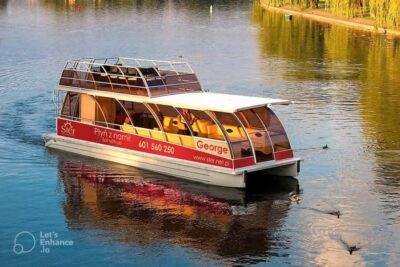
Day or Night Vistula River Cruise with Audio Guide
Read our review →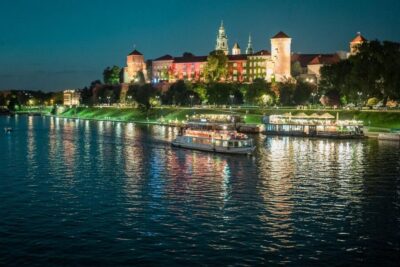
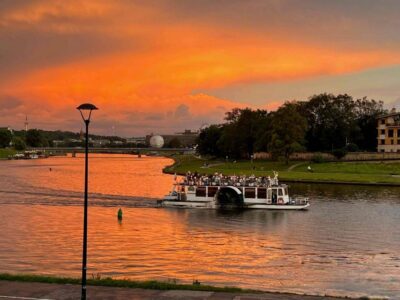
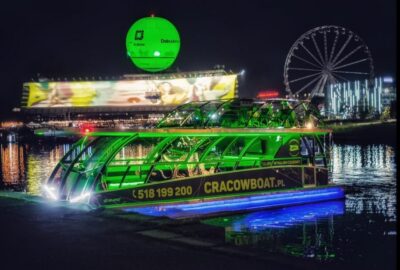
Sightseeing Cruise on Vistula River with Audio Guide
Read our review →
Vistula River Sightseeing Cruise with Audio Guide
Read our review →Browse the lists this tour appears in