
Review · BELGIUM
Ghent: 40-Minute Historical Boat Tour of City Center
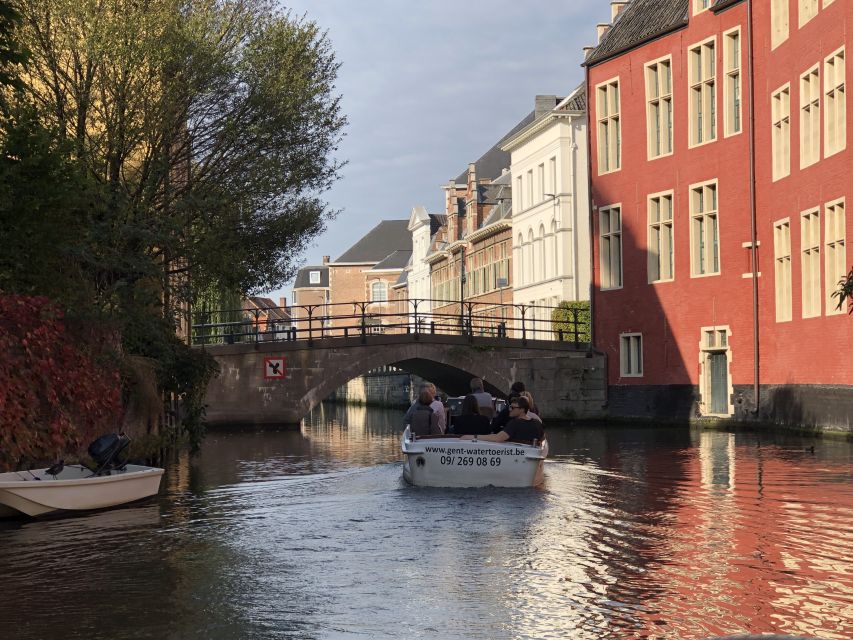
Ghent reveals its best side from the water. On this 40-minute canal cruise, you glide past medieval house fronts, old market buildings, and the hard gray walls of Gravensteen, the Castle of the Counts. It is a quick, easy way to get your bearings before exploring on foot.
I like the local storytelling, which can turn a row of handsome façades into a series of stories about Ghent’s past. I also like the choice of open or covered boats, especially in the damp weather that is common in Belgium. The main drawback is that the covered boat follows a slightly different course, and there are no fixed departures, so you need to check the next sailing at the cashier.
Key points at a glance

- Graslei gives you a front-row start: The cruise leaves from the historic Graslei waterfront, one of Ghent’s most memorable city-center views.
- The Castle of the Counts is the visual high point: From the canal, you see its steep, rugged walls from an angle you cannot get on a normal street walk.
- Local guides add character: Guides including Thomas and Matthew have been praised for clear explanations, humor, and pride in their city.
- The boat works well early in your visit: You get a quick introduction to major buildings and ideas before choosing where to return on foot.
- Weather changes the ride: Boats may be open or covered, and the covered option takes a somewhat different route.
- The price is modest: At $12 per person, this is a useful sightseeing add-on, not a full substitute for exploring Ghent on foot.
Why Ghent looks different from the canal

Ghent is easy to admire from its streets, but the waterways give you a better sense of how the old city worked. The canals were not put there merely for pretty photographs. They helped move goods, connect markets, and support the city’s commercial life.
From a boat, you also face the buildings without cars, parked bicycles, or crowds blocking the lower façades. I find that especially useful in the Graslei area, where the old buildings are close together and can be difficult to take in from the quay.
The boat moves slowly enough for you to look around, but the tour is short enough to fit into a busy day. You hear about Ghent’s medieval power, its important markets, and the people who once controlled the city. The water-level view makes the old walls and house fronts feel less like a collection of monuments and more like parts of one working city.
You should not expect a full historical lecture or a replacement for a walking tour. The value is in the combination of orientation, scenery, and local explanation. It is a compact introduction that helps you notice more when you continue through Ghent on foot.
More History on the Water in the world:
- Budapest: Historic Cruise with Welcome Drink
★ 4.7 · 6,512 reviews - Douro Valley: Historical Sites, Wine Experience, Lunch & Cruise
★ 5.0 · 5,133 reviews - NYC: Starship Landmark 90 Minute Sightseeing Cruise
★ 4.6 · 3,666 reviews
Starting at Graslei 4
The meeting point is the Graslei jetty near number 7, beside the white and red boathouse operated by Ghent Watertoerist. Pay close attention here: this is not the Bootjes van Gent departure point on the other side of the water at Korenlei.
That distinction matters because Graslei and Korenlei face each other, and the waterfront can feel confusing when several boats are loading nearby. I would arrive with enough time to identify the white and red boat house and then ask the cashier when the next boat leaves.
There are no fixed departure times. Instead, you check availability at the cashier, which gives you some flexibility but makes this less tidy than a tour with a printed schedule. If you have a train to catch or a timed museum entry, leave a buffer after the cruise.
The guide speaks Dutch, English, or French. A written tour text is available in Spanish, Italian, and German, which helps if none of the live languages works well for you.
Graslei and the first canal views

Once away from the jetty, the boat begins with the handsome fronts along Graslei. This is one of the best places in Ghent to understand why the city is so visually appealing. The façades rise directly beside the water, giving you a clean view of their shapes and details.
The guide introduces the city’s medieval past as you move through the center. I like this beginning because it does not throw you straight into a list of dates. Instead, the canal gives you a steady sequence of buildings, and the commentary explains why these places mattered.
Photography is easiest when you are ready before the boat turns or passes a building. An open boat gives you the clearest views, but you need to dress for wind and possible rain. The covered boat protects you better, though its alternate course means you should not assume that every view will be identical.
Blauwe vogels and Ghent’s lighter side

The route passes Blauwe vogels, a light artwork by Mr. Maeterlinck. This gives the cruise a small change of mood. After the medieval façades and old trading buildings, you see a piece of public art connected to the modern city.
The work is a reminder that Ghent is not simply a preserved medieval setting. The boat lets you see old and newer elements in one short route, without needing to cross busy streets or retrace your steps.
Your guide may point out details that are easy to miss from ground level. The strongest guides on this route use humor as well as facts. Thomas, a local guide praised for his enthusiasm and pride in Ghent, is one example of the personal style you might encounter. Matthew has also been noted for quirky stories and anecdotes. Guides can change, but the format depends heavily on that local voice.
A few more days afloat around the world worth a look
- Paris: 1-Hour Seine Cruise departing from the Eiffel Tower
★ 4.4 · 77,472 reviews - Istanbul: Bosphorus Dinner Cruise & Show with Private Table
★ 4.8 · 62,058 reviews - Budapest: City Highlights Sightseeing Cruise
★ 4.6 · 43,981 reviews - Budapest: Unlimited Prosecco, Beer and Aperol Spritz Cruise
★ 4.8 · 37,304 reviews
The Great Butcher’s Hall and old market life

The Great Butcher’s Hall is another useful stop for understanding how the center functioned. The building connects the canal route with Ghent’s old market life, and seeing it from the water places it in the same setting as the quays and trading streets.
The boat does not stop for a long visit, so treat this as an introduction rather than a detailed architectural tour. You will get the most from it if you note the names of buildings that interest you, then return later on foot.
I like this rhythm. The boat gives you the broad picture first. You can decide afterward which market buildings, churches, streets, or courtyards deserve more time.
Dulle Griet and the Old Fish Market
The cruise continues past Dulle Griet and the Old Fish Market. These names add another layer to the city’s commercial past, when food markets and waterways were closely tied together.
From the boat, you are seeing these places as part of a connected center rather than isolated points on a sightseeing map. That is one reason I recommend taking the cruise near the start of your stay in Ghent. The route supplies a short list of places to explore later, and the canal helps you understand how they relate to one another.
The Old Fish Market is particularly useful as a visual marker when you walk afterward. Even if the guide spends only a short time on each stop, the sequence gives you a mental map of the historic core.
Gravensteen from the water
The Castle of the Counts is the showpiece. From the canal, its steep, rough walls rise above the boat with a force that is hard to match from a normal street view.
You can imagine why the castle carried such authority. The view emphasizes defense and power, not comfort. The guide explains the people connected with its corridors and the role it played in Ghent’s past, while the boat gives you time to study the stonework from below.
This is the point where the cruise earns its $12 price for me. You can walk around Gravensteen and visit the castle separately, but the canal offers a distinct angle. It helps you see how the fortress dominated its surroundings.
Still, keep your expectations sensible. The boat does not replace entering the castle. If you want rooms, exhibits, or a close look at the interior, you will need a separate visit. The cruise works best as a visual introduction and a way to frame what you see inside.
Rabot and the return to Graslei

Rabot comes later in the route before the boat returns to Graslei 4. It extends the view beyond the most photographed center and gives the tour a broader sense of Ghent’s old defenses and waterways.
The return trip is a good time to ask yourself which buildings you want to revisit. You may have seen a façade from an angle that is not obvious from the street, or noticed a detail that the guide mentioned only briefly.
At 40 minutes, the ride is long enough to feel worthwhile but short enough that you are not giving up half a day. I would pair it with a walking route before or after the cruise rather than treating it as the main activity of your Ghent visit.
How the guide shapes the experience
The guide is the most important variable. A good explanation turns a pleasant boat ride into a useful introduction to Ghent. The strongest guides on this tour have been praised for clear English, multilingual delivery, humor, patience, and detailed stories about the buildings.
You may hear the commentary in Dutch, English, and French during the same tour. That is convenient for mixed-language groups, though multilingual tours can take longer at each stop because the guide repeats key information.
The style can be lively rather than formal. One guide has been described as energetic and amusing, while another was remembered for quirky anecdotes and a strong grasp of the city. I like that approach for Ghent. The city has plenty of dates and architectural terms, but a memorable story often stays with you longer.
Do not expect every guide to use exactly the same script. The experience depends on the person leading the boat, the weather, and the mix of languages on board. That is part of the local character, but it also means the depth and humor may vary.
Open boats, covered boats, and weather
The boats run open or covered depending on conditions. On a dry day, an open boat usually gives you the clearest view and the best chance for unobstructed photographs.
In drizzle or cold weather, the covered boat is the sensible choice. The covered option has a slightly different course, so you may see a somewhat different selection of the route. That is a fair trade for staying dry and comfortable.
Ghent weather can change quickly, and the canal is more exposed than a street lined with buildings. I would carry a rain jacket even if the forecast looks reasonable. If the cashier offers a covered boat during wet weather, I would take it rather than trying to prove your toughness.
One practical detail matters: if you reserve ahead, still check with the booking office by the boat to confirm your place and the departure time you want. Since departures are not fixed, this quick check can prevent confusion.
Is $12 good value?
At $12 per person, this is one of the easier Ghent activities to justify. You receive 40 minutes of sightseeing, a live guide, and a water-level view of central buildings that can be hard to appreciate from land.
The price is especially fair if you are visiting for one day or arriving without a clear plan. A short cruise helps you choose where to spend your limited walking time. It also gives your feet a break without turning the afternoon into a passive sightseeing session.
The value drops if you are expecting a long, detailed history course or a private experience. This is a shared boat tour, and the route can change with the weather. You are paying for a concise city overview, not a full guided exploration of every landmark.
For most visitors, I would call it a strong low-cost addition. It pairs well with Gravensteen, the old market area, and a walk along Graslei and Korenlei.
Who should take this cruise?
I would recommend it to first-time visitors, couples, families who want a low-effort activity, and anyone who enjoys architecture but does not want to begin with a long walking tour. It is also useful near the start of a Ghent stay because the guide points out places you can return to later.
It suits people who want a relaxed introduction rather than a highly structured historical seminar. The multilingual format makes it practical for international groups, and the covered boat helps on damp days.
The tour is not suitable for wheelchair users or people with mobility impairments. You should also be comfortable with the possibility that the departure time is determined at the cashier rather than fixed far in advance.
What to know before you book
You can cancel up to 24 hours ahead for a full refund, and the reserve-now, pay-later option keeps your plans flexible. Check the current starting time and availability before you go, since departures are not fixed.
The meeting point is Graslei Jetty near number 7, at the white and red boat house. Do not go to the Bootjes van Gent point across the water at Korenlei.
The live languages are Dutch, English, and French. Written tour text is available in Spanish, Italian, and German. If you want the clearest possible route, ask whether the next boat is open or covered and what course it will take.
Should you book it?
Yes, if you want a short, affordable introduction to Ghent with a good view of Gravensteen and the old canal-side buildings. I would especially book it early in your visit, then use the guide’s suggestions to plan your walking time.
Skip it only if you dislike shared sightseeing boats, need completely reliable departure times, or want an in-depth visit to the castle itself. For $12, the combination of local stories, medieval façades, market buildings, and a water-level view of the Castle of the Counts makes this a sensible addition to a Ghent day.
FAQ
Where does the Ghent boat tour leave from?
The tour leaves from the Graslei Jetty near number 7, beside the white and red Ghent Watertoerist boat house. It is not the Bootjes van Gent departure point on the Korenlei side of the water.
How long does the boat tour last?
The guided cruise lasts 40 minutes and returns to Graslei 4.
Which languages are available during the tour?
The live guide speaks Dutch, English, and French. Written tour text is available in Spanish, Italian, and German.
Does the boat have a roof?
Boats may be open or covered, depending on the weather. The covered boat follows a slightly different course.
Are departure times fixed?
No. There are no fixed departures. Check with the cashier to find out when the next boat leaves.
Is the tour suitable for wheelchair users?
No. The activity is not suitable for wheelchair users or people with mobility impairments.
Just added around the world
- Reykjavik: Whale Watching and Dolphin Watching Yacht Cruise★ 4.5 · 707 reviews
- Reykjavik: Whale and Puffin Watching RIB Boat Tour★ 4.7 · 293 reviews
- Rethymno: Sunset Cruise on a Wooden Pirate Boat★ 4.3 · 581 reviews
- Reykjavik: Small Group Golden Circle from Cruise Terminal★ 4.6 · 293 reviews
- Rethymno: Sunset Catamaran Cruise – Sushi & Open Bar★ 4.8 · 446 reviews
- Reykjavik: Best Value Whale Watching Boat Tour★ 4.5 · 300 reviews
- Rethymno: Pirate Boat Cruise with Swimming Stop★ 4.1 · 293 reviews
- From Hervey Bay: Remote K’gari Tour by Boat with Lunch★ 4.9 · 1,229 reviews
Belgium Boat Tours, compared.
Ghent: 50-Minute Medieval Center Guided Boat Trip
Read our review →
Bruges: Small Group Boat Cruise and Guided Walking Tour
Read our review →
Bruges: Guided Tour & Boat Ride with Optional Beer Tasting
Read our review →
From Brussels: Bruges Day Trip with Boat Tour Option (ENG)
Read our review →
From Brussels: Bruges Day Trip with Boat Tour Option (ES)
Read our review →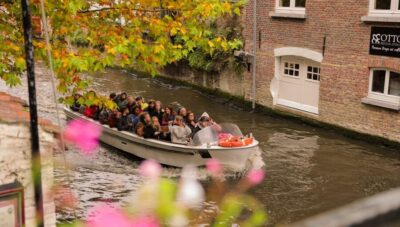
Day Trip to Bruges with Optional Seasonal Cruise
Read our review →Browse the lists this tour appears in